The garden has been a little quieter here over the past couple of weeks. Now the clocks have gone back and the light starts leaving before you've really finished what you need to get done. And we've had a run of stormy windy weather here in North Yorkshire, fog sitting in the dips first thing and burning off by mid morning, followed by rain and strong winds that make filming quite problematic! It's been a struggle getting jobs done too in this weather, but there are still lots of them on my list.
The first has been overwintering chillies and peppers
I have to admit that I threw my own chilli and pepper plants in the compost at the end of the season for years before I realised I could actually overwinter them, meaning I'd get earlier and bigger harvests the following year!
So this is what I do to keep them going.
If you only have a couple of plants and you don’t mind moving them inside the house for the winter, simply dig them up if they are in a garden bed, leaving as much of the root ball intact as possible, add them to a pot, water them in, and then move them to a sunny windowsill indoors where they can be kept warm until the following season.
To overwinter your plants outdoors you’ll need a greenhouse, poly tunnel, shed or even a garage. Then start by removing all of the fruit from the plant, and it may seem quite drastic, but you’ll want to remove most of the branches and all of the leaves, leaving only a couple of Y shaped branches.
Then dig up the plant, again keeping as much of the root ball intact as possible, pop it into a pot, add a little more compost, firm and water it in, then just move it in the shed or garage, ideally with some natural light if possible.
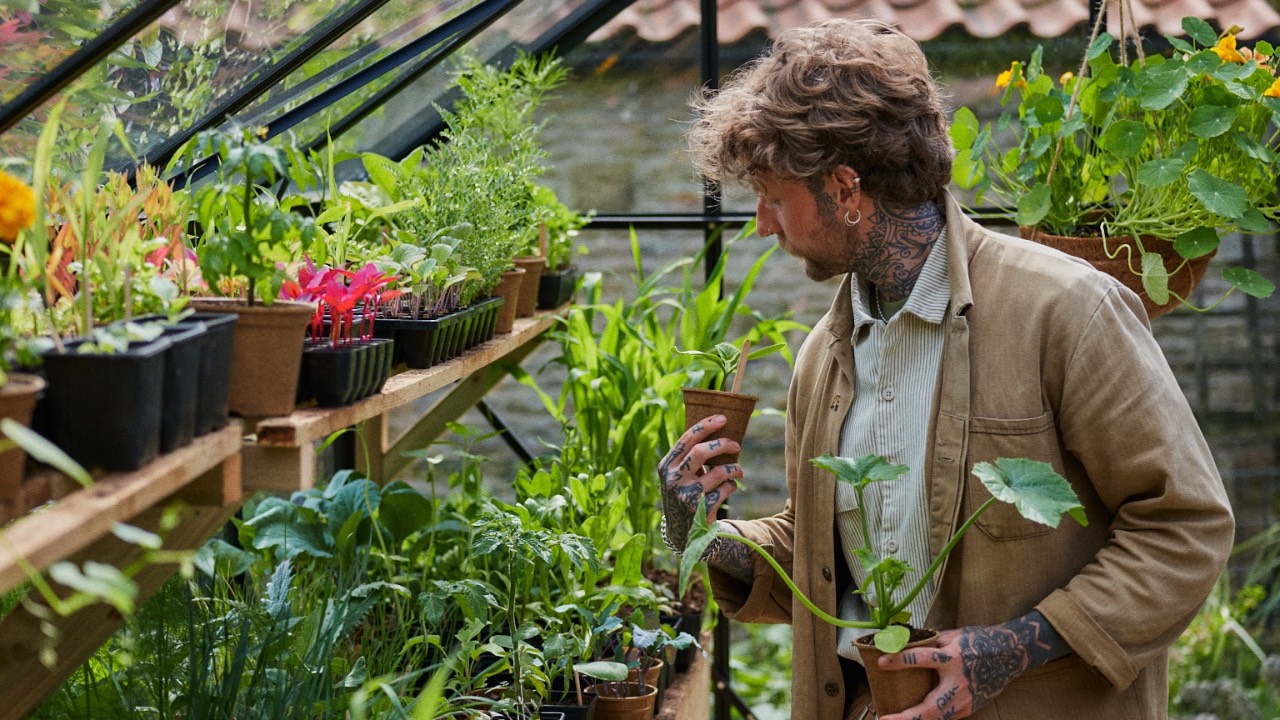
Or cover with an additional layer of fleece if keeping them inside a greenhouse or poly tunnel and they should go dormant and survive the winter, giving you a much earlier crop when they are re-planted next year. Mine are now lined along the greenhouse bench and the kitchen windowsill.
The ginger beer I posted about is bubbling away beside them. And I've spent most of today reading your replies to the weedkiller post, which I'll come back to further down, because there's something I've been wanting to tell you.
It's Bonfire Night tonight and Remembrance Sunday this weekend, so it's a reflective sort of week for a lot of us. If you're building a fire, please lift the base of the pile and have a look before you light it. Hedgehogs love a heap of sticks this time of year and they won't move out of the way.
Ginger beer from a ginger bug: the bits I couldn't fit in the reel
The reel showed you as much as I could fit within 60 seconds or so, but that can't really show the waiting, and the bit where it doesn't work, which is the bit most people message me about.
So here's the longer version.
A ginger bug is a little colony of wild yeasts and bacteria that live on the skin of ginger, so you're just giving what's already there some sugar and water and a warm spot, and letting it multiply until it's strong enough to make a whole batch of carbonated ginger beer. It’s the same idea as a sourdough starter if you've ever made one of those. I suppose it’s farming, really, just on a very small scale.
Starting the bug
-
Into a clean jam jar: 250ml of unchlorinated water, 1 tablespoon of grated ginger (skin on) and 1 tablespoon of sugar. Then give it a good stir.
-
Cover with a cloth or a bit of kitchen roll held on with a band, so it can breathe but flies can't get in.
-
Every day, add another tablespoon of grated ginger and another sugar, and stir.
-
Somewhere between day 3 and day 7 it'll start fizzing when you stir it, with little bubbles creeping up the sides, and it'll smell sharp and a bit yeasty. That's when It's ready to go.
When it sulks
Mine have stalled for all sorts of reasons and it's nearly always one of these.
Chlorine. Tap water is treated to kill microbes, which is great for drinking and rubbish for this. Leave a jug out overnight, or boil it and let it cool.
Peeled ginger. The yeasts live on the skin, so if you peel it and you've thrown out the very thing you're trying to grow. Scrub it if it's dirty, but leave the skin on.
The ginger itself. I always use organic where I can. Some conventional ginger is treated to stop it sprouting in storage, and I can't tell you for certain how much that affects a bug, but my organic ones have always worked much better.
Cold. A kitchen in November is not a kitchen in July, so popping it near a radiator (not on it) is a good option, or by the boiler cupboard or something.
Making the ginger beer
This makes about a litre and a half.
-
Simmer 1.5 litres of water with a piece of grated ginger about the size of your thumb and a bit (roughly 50g) and 120g of sugar for about 15 minutes.
-
Let it cool right down and properly cool as hot liquid will kill your bug and you'll be back to day one.
-
Add the juice of a lemon, strain, then stir in about 125ml of strained, bubbly ginger bug.
-
Bottle it, leaving a few centimetres of space at the top. Swing-top bottles are best as the pressure builds fast. Burp them regularly.
-
Leave at room temperature for 2 to 3 days, then into the fridge to slow fermentation.
A tip I wish someone had given me sooner is to open everything over the sink, at least the first few times. These things build real pressure and glass bottles can and do burst if you forget about them.
Keeping the bug going
Top it back up with water, give it a feed, and keep it in the fridge with the lid on loosely. Feed it once a week and it can sit there quite happily for months. Take it out a day before you want to brew and give it a feed so it's lively again.
The often overlooked issue with spring bulbs
Most of us buy bulbs from the garden centre, and just plant them into the ground or pots, and then enjoy the blooms without thinking much about where they came or how they were treated before we bought them, I know I did for years.
But conventional bulb growing, a lot of it in the Netherlands, leans hard on pesticides and fungicides. Pesticide Action Network Europe has warned for a while that residues come with the bulbs and the plants into our gardens. Researchers at the University of Sussex tested 29 garden centre plants that were being sold as good for bees, and only two of them had no pesticide in at all. Most had more than one, and some had neonicotinoids at levels known to harm bees. Those chemicals hang about in plant tissue and soil for a long time. I found it genuinely upsetting as I have always grown organic, but I didn’t even consider the origin of my bulbs for years, and thinking I was doing something positive for wildlife and the idea that those pots of spring flowers for the bumblebees end up dosing them with toxins.
So now I buy organic bulbs, even though there are fewer options and they cost a bit more. Where I can't, I ask the supplier whether they're treated. One email doesn't change much, but a few thousand of them probably will, so I'd suggest doing the same, as that's likely how we get more organic bulbs onto the shelves.
A little job for this week: get your tulips in
November is my favourite month for them, because colder soil usually prevents tulip fire, a fungal disease that leaves the leaves spotted, scorched and twisted in spring.
And I plant them deeper than you might think, about three times the height of the bulb, so somewhere around 15 to 20cm. Deeper planting seems to help them come back the following year rather than fizzling out. Pointy ends up, although they're surprisingly good at sorting themselves out if you get it wrong. In pots, a layer of bramble prunings or chicken wire on top stops the squirrels digging them back up for a snack.
My two favourites, if you're still choosing:
'Jacuzzi' is a soft, silvery lilac on these dark, almost black-purple stems. On its own it can look a bit washed out, but put it near something darker and it glows.
'Princess Irene' is the opposite. Burnt orange flamed with purple, and lightly scented, which not many tulips are. It's an old variety and still one of the most reliable I've grown.
Some exciting news
I've written another book!
It's called No Need to Weed, and it’s now available to pre-order.
I managed large kitchen gardens for owners who couldn’t stand the sight of a single weed, and I pulled, hoed and mulched my way through it for hours at a time. I was gardening organically, I was proud of my tidy beds, and I was still, without knowing it, fighting the very plants that were trying to repair the soil. It took me far too long to stop and ask why they were there in the first place.
When I finally did, everything changed. The dandelions I’d cleared for years were feeding bees in early spring and breaking up compacted ground. The nettles, chickweed and dock I’d thrown in my green waste bins were food, medicine and habitat.
I've been sitting on this for a long time and it feels very strange and very lovely to finally say it out loud to you.
Here's the back cover copy:
Stop fighting weeds, and start putting them to work.
In this practical, thought-provoking guide, Sunday Times bestselling author Jamie Walton (@nettlesandpetals) challenges everything we’ve been taught about weeds. Learn why they appear, how gardening with natural processes reduces them, and how to welcome the right ones back with purpose, for pollinators, healthier soil and companion planting. Then discover countless creative ways to use the plants already growing freely around you.
Packed with delicious recipes, simple homemade remedies and practical craft projects, this book invites you to garden with nature, not against it. Because when every wild plant has a use, there is no longer a need to weed!
Why are pre-orders so important to authors: Well they show retailers there’s real demand for the book, and in this case, a different way of gardening, and that helps decide whether it makes it onto shelves where other people can find it, so If it sounds like your kind of thing, it would mean the world to me if you’d pre-order a copy. Link below:
 |
My Bindweed post
Bindweed gets more hate than almost anything in a British garden, and I understand why. Its roots go down metres, and every snapped piece can grow into a new plant, so digging it out often just spreads it.
But it doesn't turn up at random, it loves bare, disturbed, compacted ground. It's a pioneer, basically trying to knit back over a wound in the soil. So rather than fighting it head on, I aim to change the conditions it's showing up for. Thick mulch to keep the ground covered and the soil life fed. Cutting it back again and again so it never gets the light it needs, and the bits I pull go in a bucket of water to steep into a feed, so whatever those deep roots are pulled up gets watered with the feed.
This week on socials
-
Homemade ginger beer with a ginger bug. The short version of the recipe above.
https://www.instagram.com/reel/De6x75AOlly/?psln=N2hwNHdheWl0bmQ4
-
Overwintering chillies. https://www.instagram.com/reel/DfDMe0jOTBc/?exln=Y3J0azdlNWRhOHFo
-
Bindweed benefits. https://www.instagram.com/reel/DfNMc7dO5YO/?cplk=MTB4Ym12bHViNGwxbQ==
-
The weedkiller industry. The carousel that started a lot of conversations this week. https://www.instagram.com/p/DfVH3-BDmS3/?rpxt=MXdpeXk2bjdtaWk5aw==
Thanks for reading,
Jamie x

Responses