Today's editon is a slightly longer read than my usual weekly emails, and far less practical, but I wanted take the time to elaborate on a couple of my recent social posts, as many of you have just joined me here as a result.
So, first of all, welcome! thank you for taking the time to join my newsletter, and for deciding to connect with me beyond social media, it really does mean a lot!
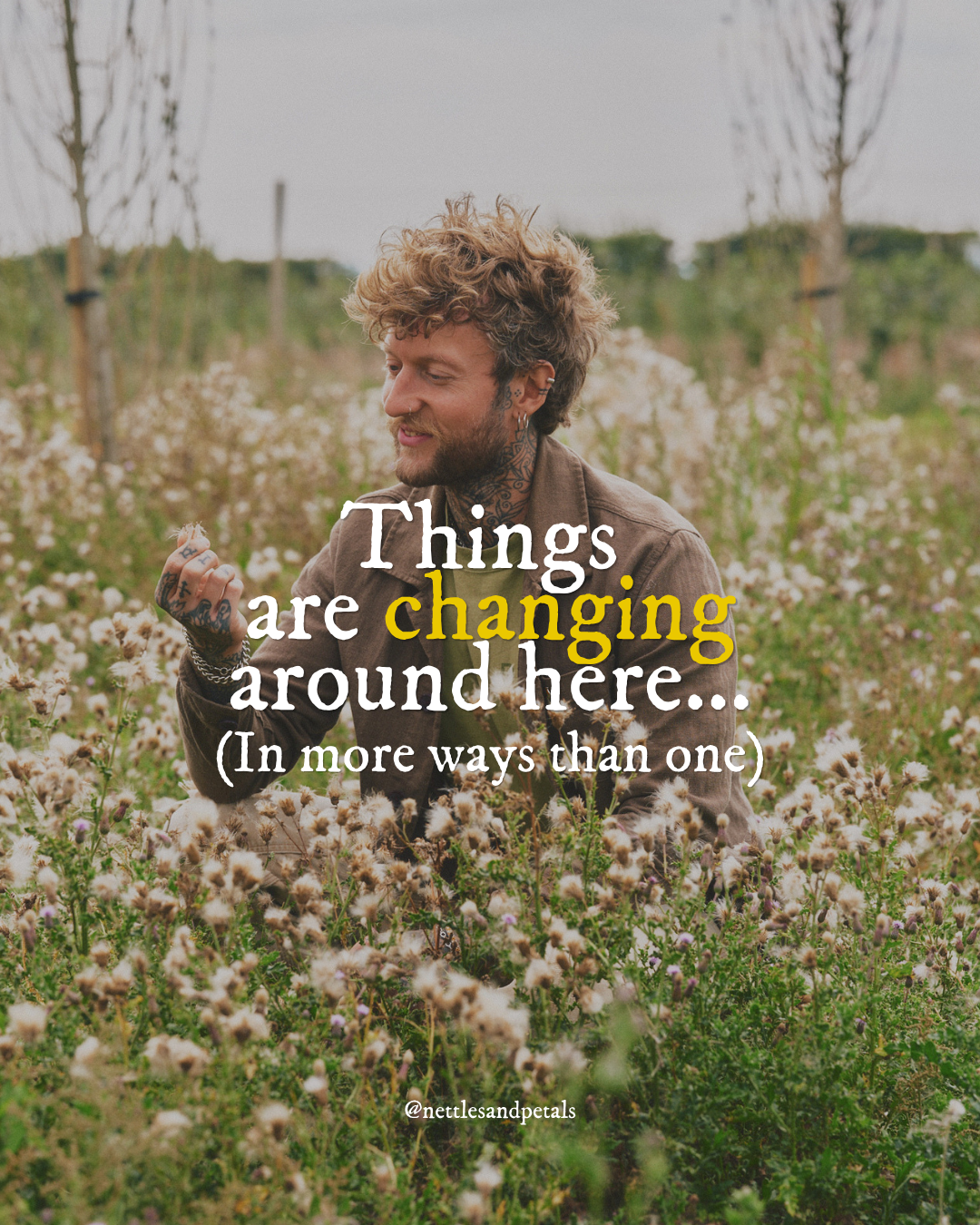
Last week I shared a post on Instagram about social media, what it’s become and what I’d really like to contribute to it moving forward. I wasn’t sure how it would to recieved as it felt more personal than most things I usually post. But then the comments started coming in... So many of you sharing your opinions, inspirations and personal stories, almost all of them long, thoughtful and incredibly kind. I’ve been reading through them for days now, wondering how to respond in a way that does them justice, which I am still struggling with to be honest. But I wanted to use this space to go a little deeper.
What’s really stayed with me after reading through them, is just how many said that they feel the same, and that they’d welcome slower, longer and more thoughtful content. That’s really given me so much encouragement. Because I never set out to be an “influencer” and I still struggle with the word. I just wanted to share the quiet joy I’d found in gardening. But what started as a fun way to share what I was learning and doing has grown into something I never could have imagined.
However, as my page has grown, I can’t help but feel like social media isn’t quite what it used to be... Because you may have noticed that most platforms no longer automatically show us content from those that we choose to follow. Instead, when a reel is posted, it’s usually shown to people who don’t follow you first. If they don’t stop scrolling within a few seconds, it will likely not travel to those that actually follow you. That’s a strange pressure particularly when your work is about ecological gardening. Soil takes years to build, seeds take their time, and some of the most important things happen quietly, out of sight. Yet social platforms are built to hold our attention at all costs and the endless feed is designed to trap us in an addicitive loop of dopamine. Depth has to compete with the algorithm, and I have personally felt the pull to chase views. I spend far more time on screens than I’d like, which, for someone who spends so much of his working life encouraging people to slow down and look closely, is an irony I’m very aware of.
There is something strange about capturing nature through a camera phone, then sending it out into a feed designed to make sure nobody lingers on it for long, so that they can then be pulled into a doom scroll. More than once, I’ve wondered whether my energy would be better spent elsewhere.
But after the response I have had to sharing those thoughts with my community, I keep coming back to the same answer...
Although social media can be a very negative space, I’ve personally watched a video about pollinator-friendly flowers reach a million people, and I don’t think of that as a statistic. I think of it as a million small chances to support our struggling ecosytems: a window box sown with something for the bees, a patch of lawn left to flower, a conversation started at a kitchen table. And I’ve seen this community rally behind projects, champion conservation, and teach each other things no textbook ever taught me. From a field in North Yorkshire, I can talk with millions of gardners and growers all over the world. When I really sit with it, that is genuinely remarkable.
So maybe the problem isn’t just social media itself, maybe it’s largely what it pushes us towards when we stop paying attention? And as my profiles have grown, I have felt an increasing responsibility to pay close attention to what I post, interact with, and contribute to.
That's why things are changing a little around here. Because gardening, for me, has never been about plants alone, or quick hacks, even if they are what get the most views. It’s about our relationship with nature. It’s about the food on our plates and where it comes from. It’s about the communities we belong to, the land we share, and the countless small choices we make every day: what we buy, what we waste, what we leave alone. A garden is where all of those threads meet, and where I feel we can actually do something about them. That’s what I want to make more room for here.
More stories, about the people, places and projects changing how we grow and eat. More questions, including the ones I don’t have neat answers to. More experiments, where we try things together and share honestly what worked and what didn’t. More conversations that carry on after the phone is put down: at the allotment, over the fence, in a school garden, around a table.
I’m still learning and I always will be. So I’d much rather figure things out alongside you than pretend I have it all worked out. And don’t worry, the practical side isn’t going anywhere. There’ll still be plenty of sowing, growing, seed saving, composting and the occasional weed being championed. Practical advice is how so many of us find our way in. I just want it to sit alongside a little more curiosity about why we garden, and what our gardens could become.
This newsletter feels like one of the natural homes for that. It’s one of the few places I can write without worrying about hooks or holding someone’s attention for thirty seconds, and where you can simply hit reply and talk to me.
And I’d love your help. If something here resonates, reply and tell me. Ask a question. Forward it to someone who might enjoy it. Every little interaction helps these ideas travel a bit further than the noise. So here’s to making this little corner of the internet somewhere that inspires us to do more outside of it.
Jamie 🌱
A quick note: As of next week I will return to posting my newsletters on a Thursday morning, and on the whole they will be far more practical than this one. Although I do intend to make more space for more thought led aspects to them too, so I hope that they will be a welcome addition.

Responses